Ghost Signs of London
An exploration of London's ghost signs through paintings and sketchbook studies, capturing layers of historic painted advertisements and changing urban texture.
Ghost signs are a familiar but often overlooked feature of London's streets. These faded painted advertisements survive on the sides of buildings long after the businesses they promoted have disappeared. Weather, redevelopment and changing fashions have all left their mark, creating layers of history that can still be seen across the city. They offer a fascinating glimpse into London's commercial and social past.
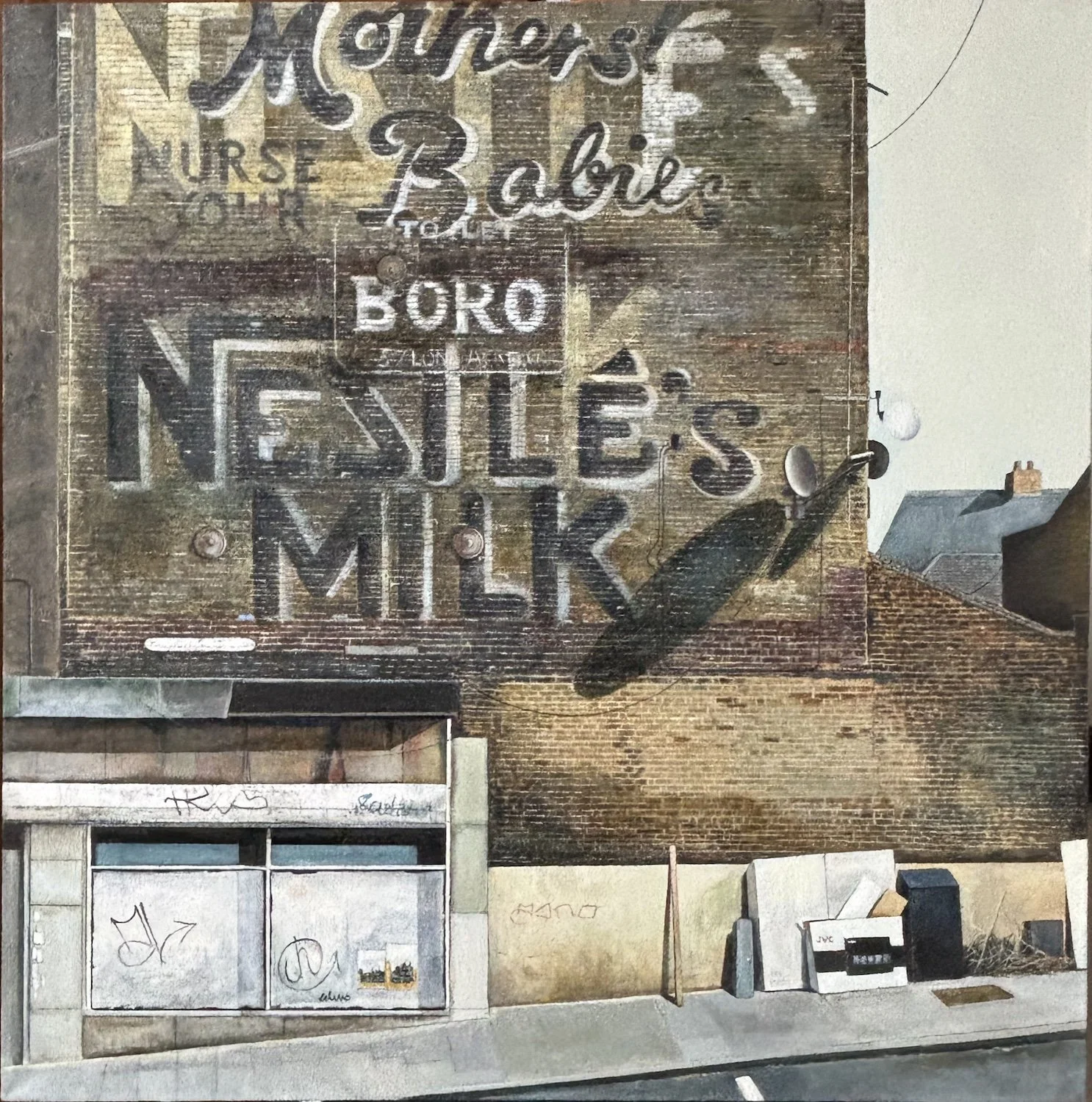
This painting of a building just off Wandsworth Road features superimposed layers of ghost signage. The Mother’s and Babies Nestlé advertisement appears to already be superimposed over some text, possibly an earlier Nestle advertisement. The To Let has been added later. The overlapping advertisements show how buildings evolved over time, with new messages often painted directly over older ones rather than removing them completely. This accumulation of lettering and imagery gives many London ghost signs their distinctive character.
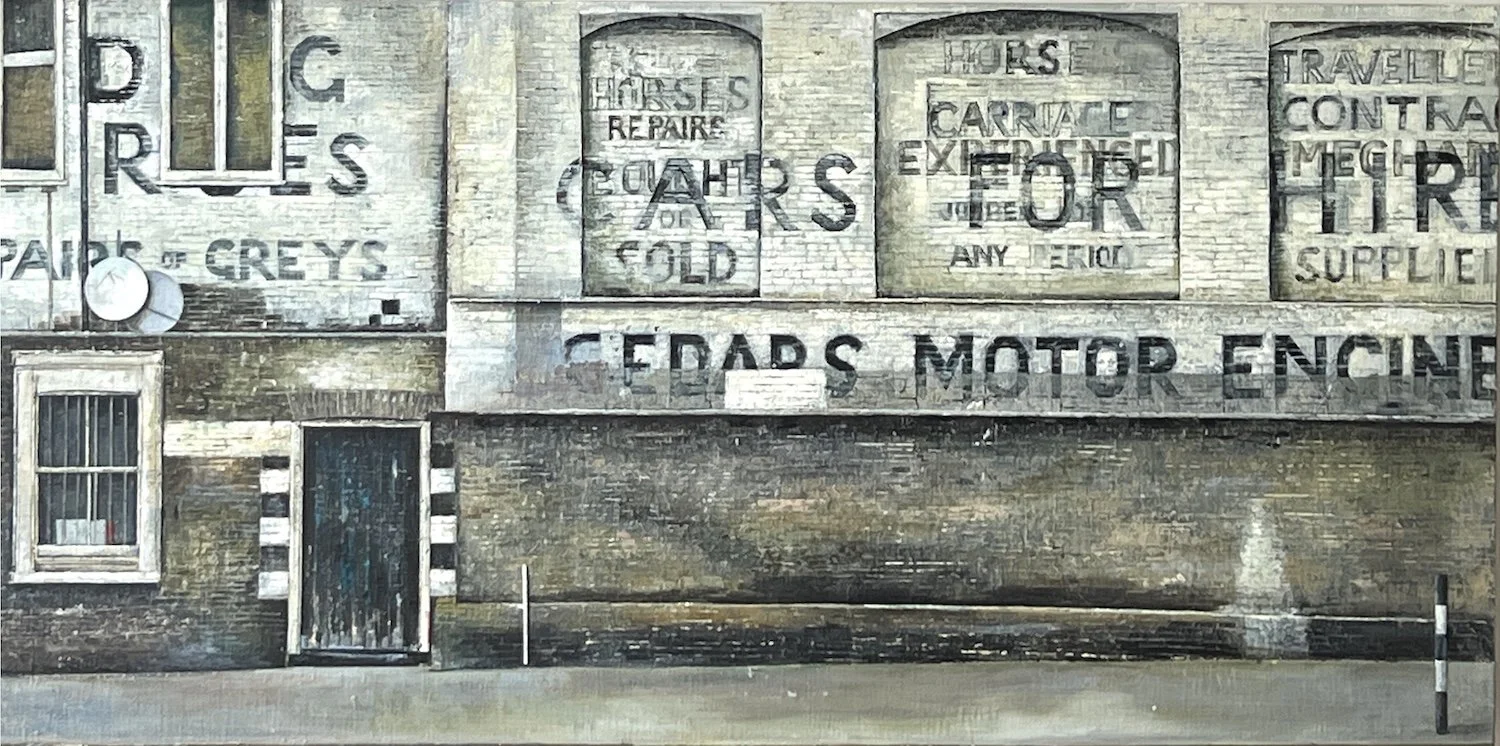
Similarly next painting, near Stockwell, shows an advertisement for cars superimposed on an earlier horse and carriage related advert. The transition from horse-drawn transport to the motor car can sometimes be traced through surviving painted advertisements such as these, where different eras of transport briefly coexist on the same wall.
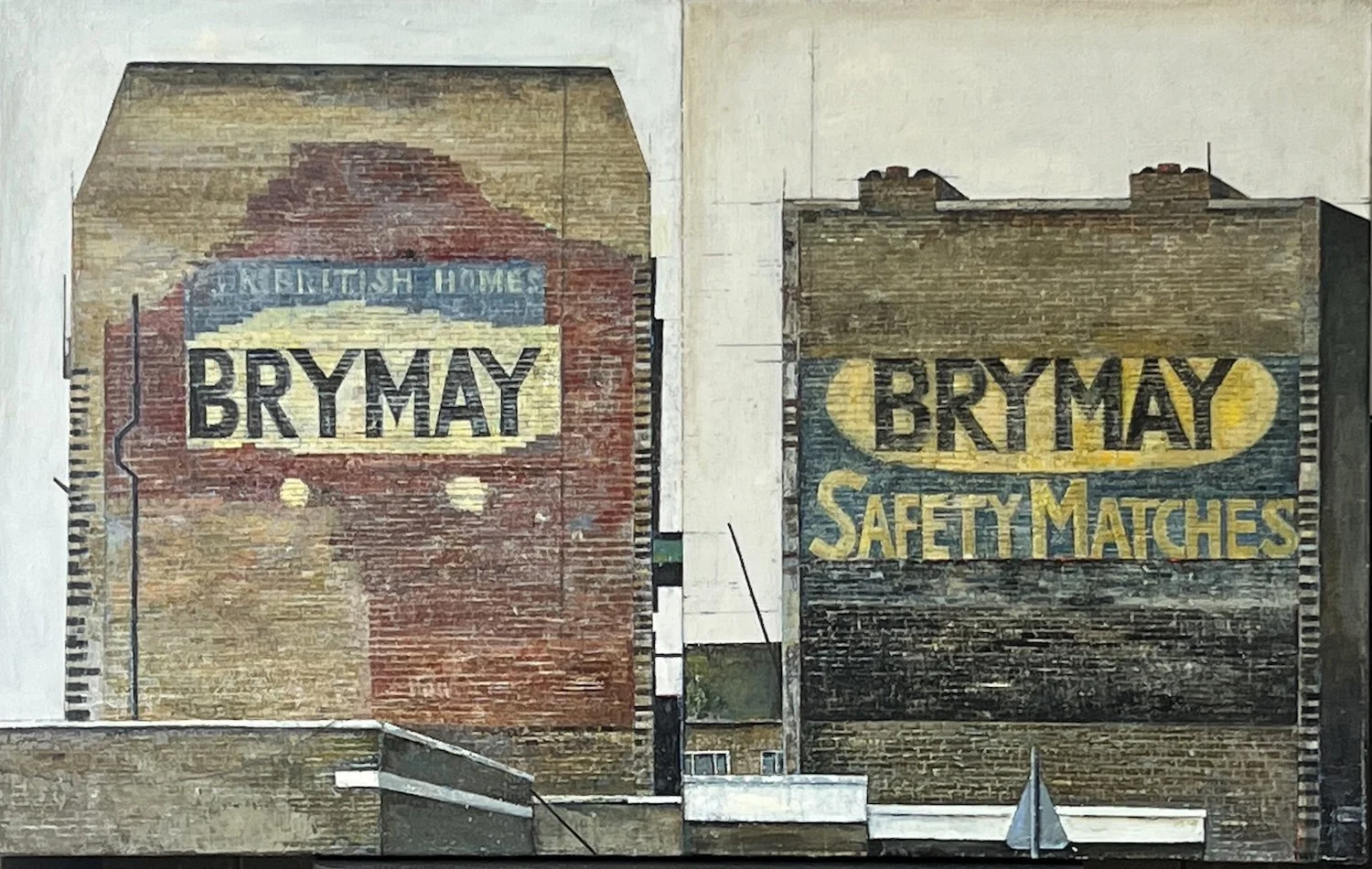
Brymay ghost signs at Lillie Road (L) and West Brompton (R)
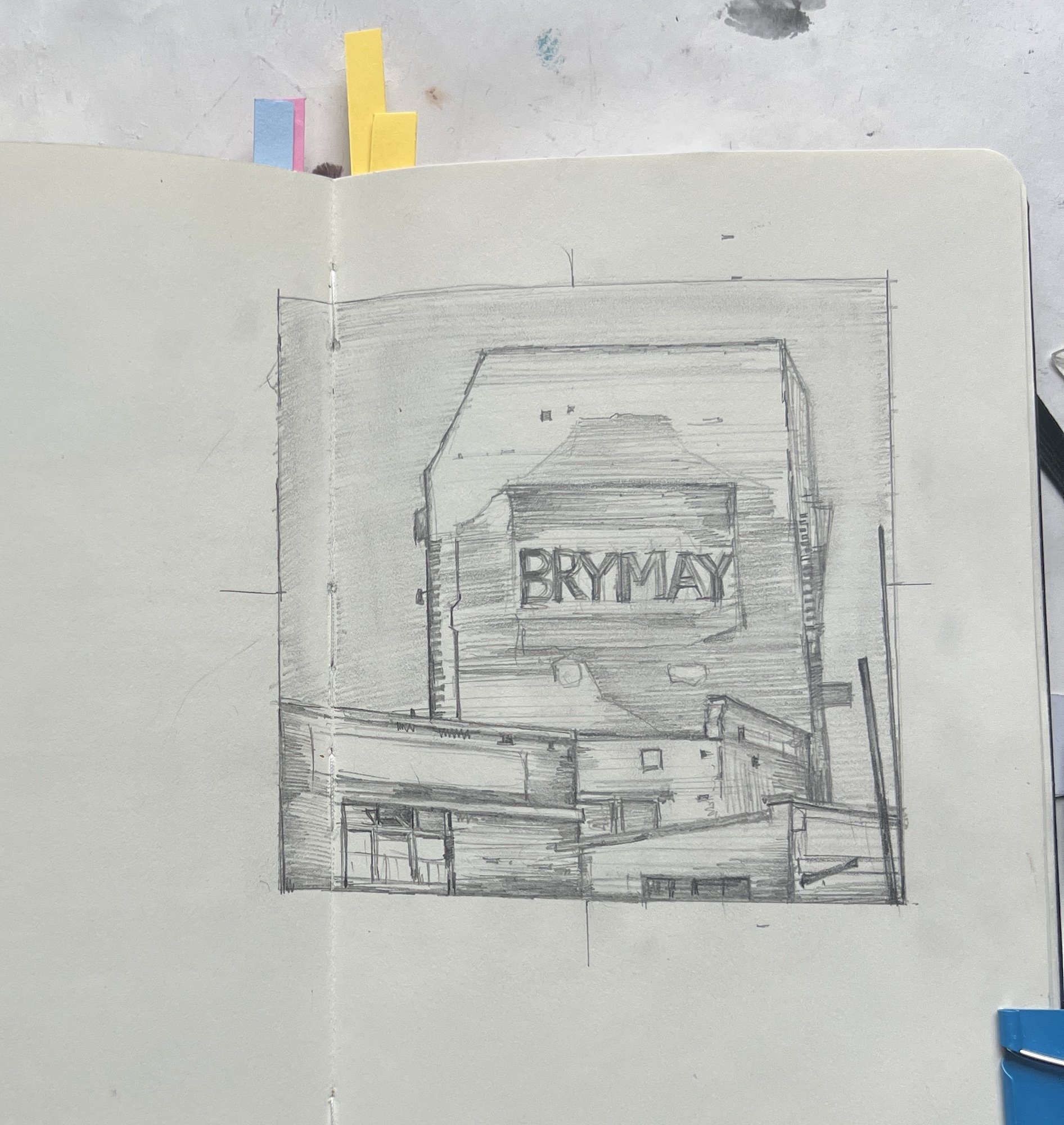
The Brymay painting features a double image of the ubiquitous advertising commonly seen across London. Brymay advertisements were once widespread across London, and remnants can still be found in a number of locations. Although faded, they remain recognisable examples of early painted commercial advertising.
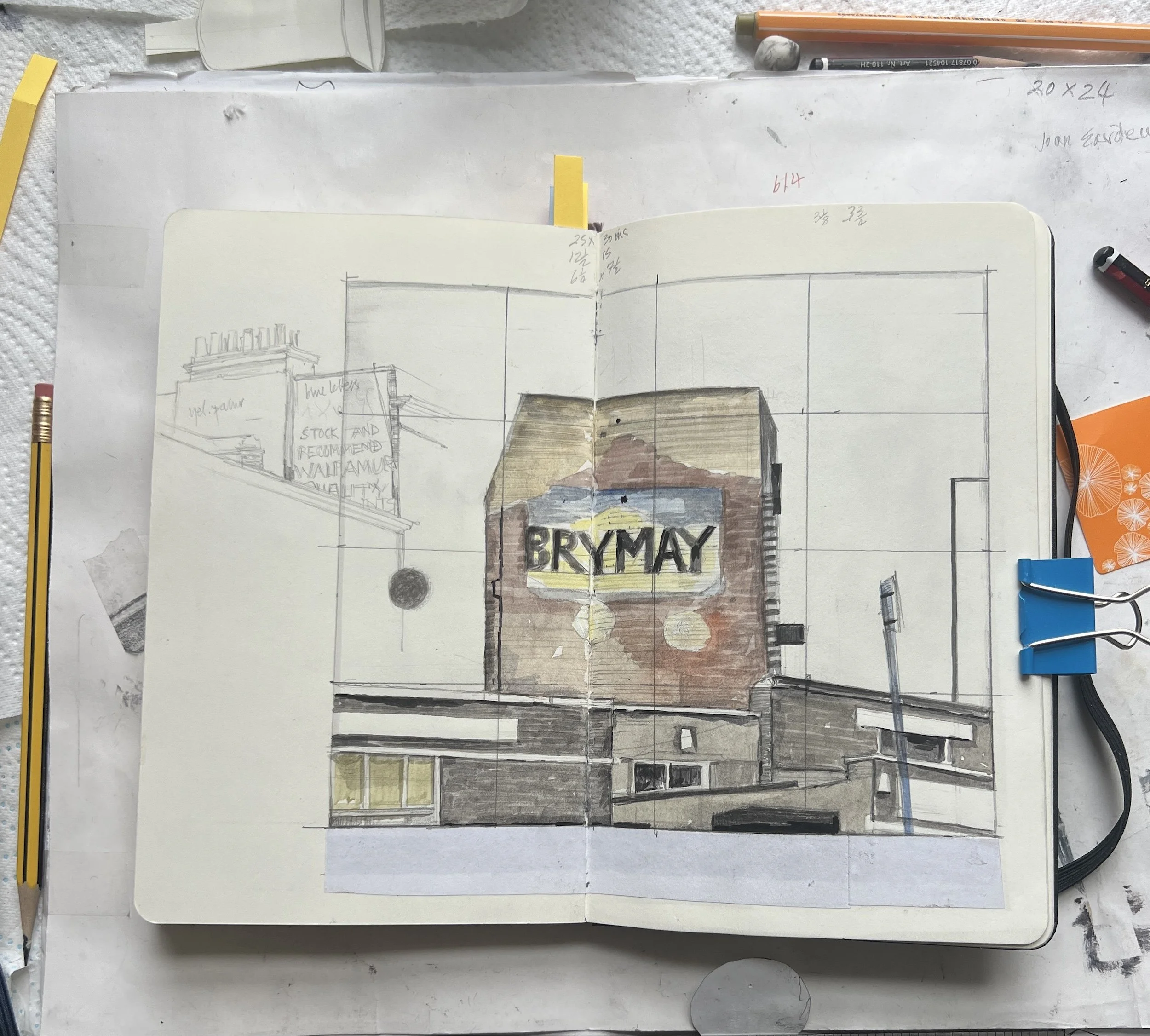
Sketchbook pages of Brymay ghost sign on Lillie Road Fulham.
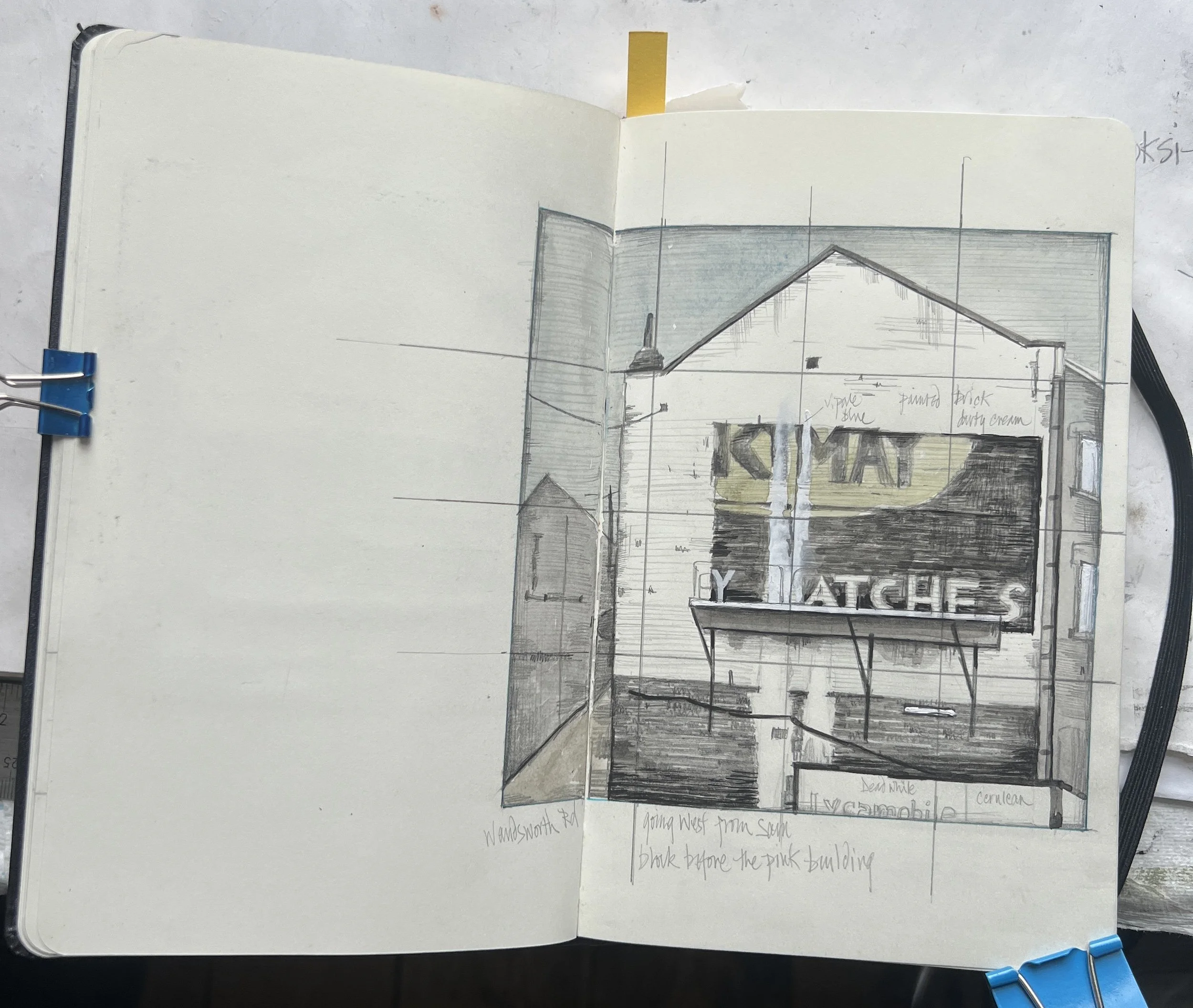
Sketchbook page: Brymay sign off Wandsworth Road.
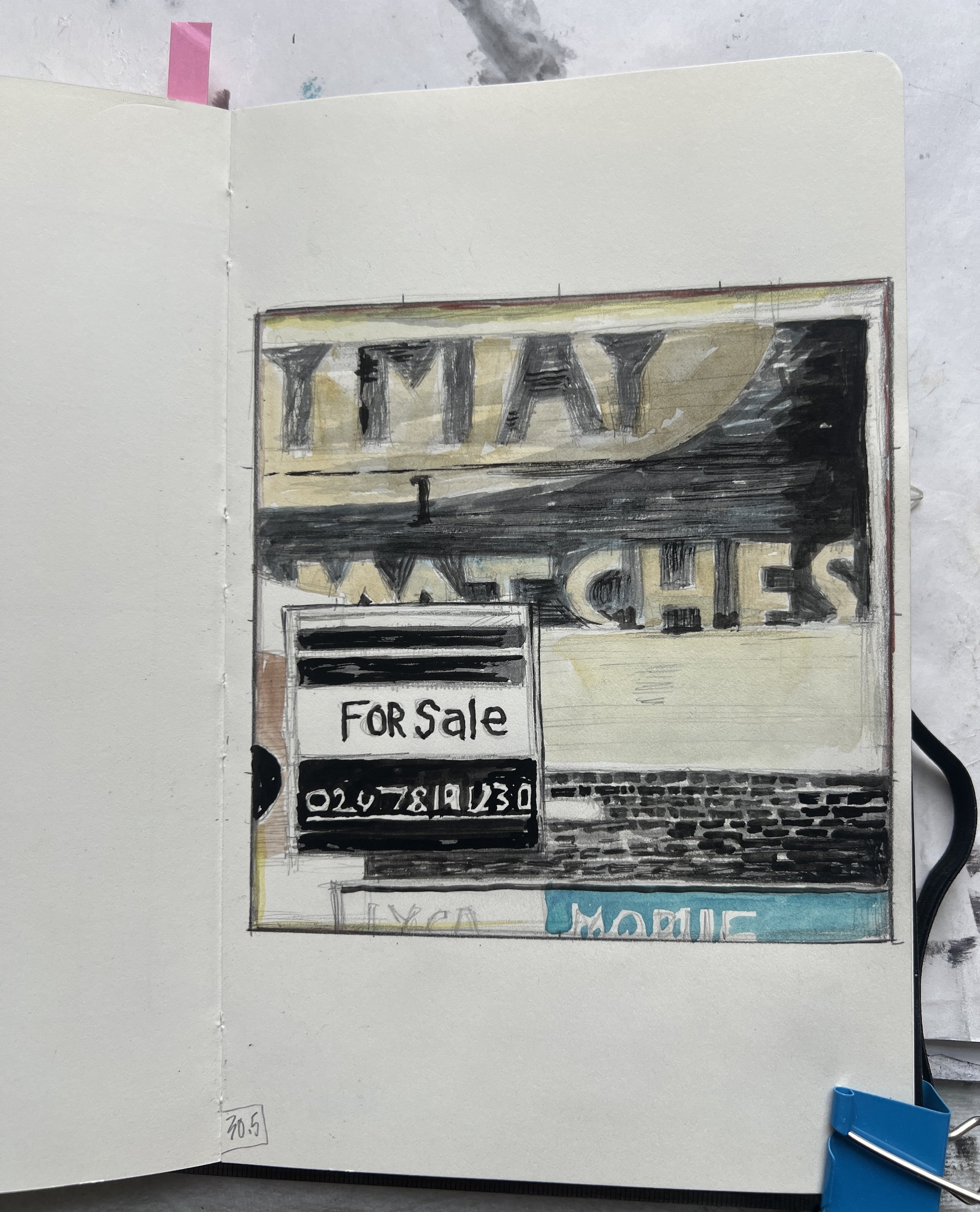
Sketchbook page of Brymay advertisement off Wandsworth Road now with For Sale sign
These sketchbook studies explore details that later appear in the finished paintings, recording the character of the walls, brickwork and surrounding streetscape.
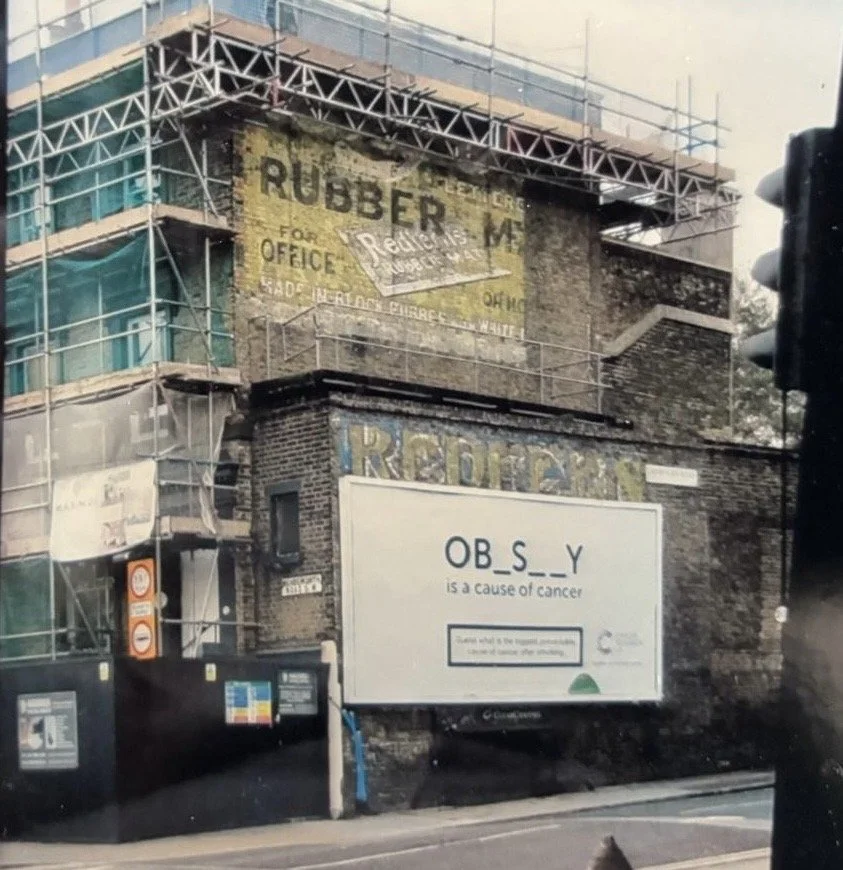
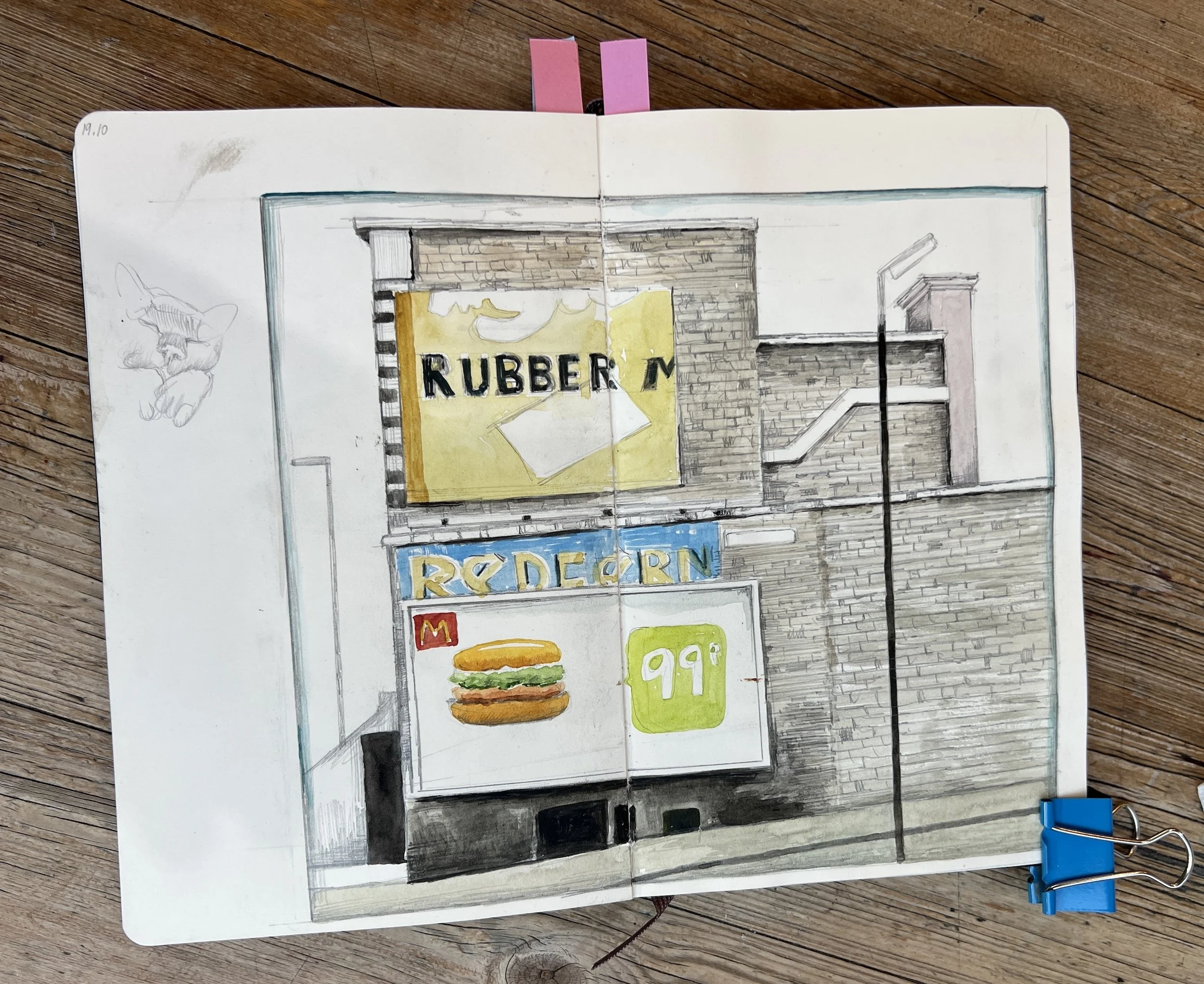
Ghost signage for Redfern Rubber Matts on the corner Lambourn Road off Wandsworth road. Usually covered up with a hoarding, the messages on the hoarding change. Pictured here in 2018 featuring a caution against obesity and in 2022 a sketchbook page of the same location now covered with a McDonalds advertisement.
The changing hoardings become another temporary layer over the historic wall beneath, reflecting how London's streets continue to evolve while traces of the past remain visible.
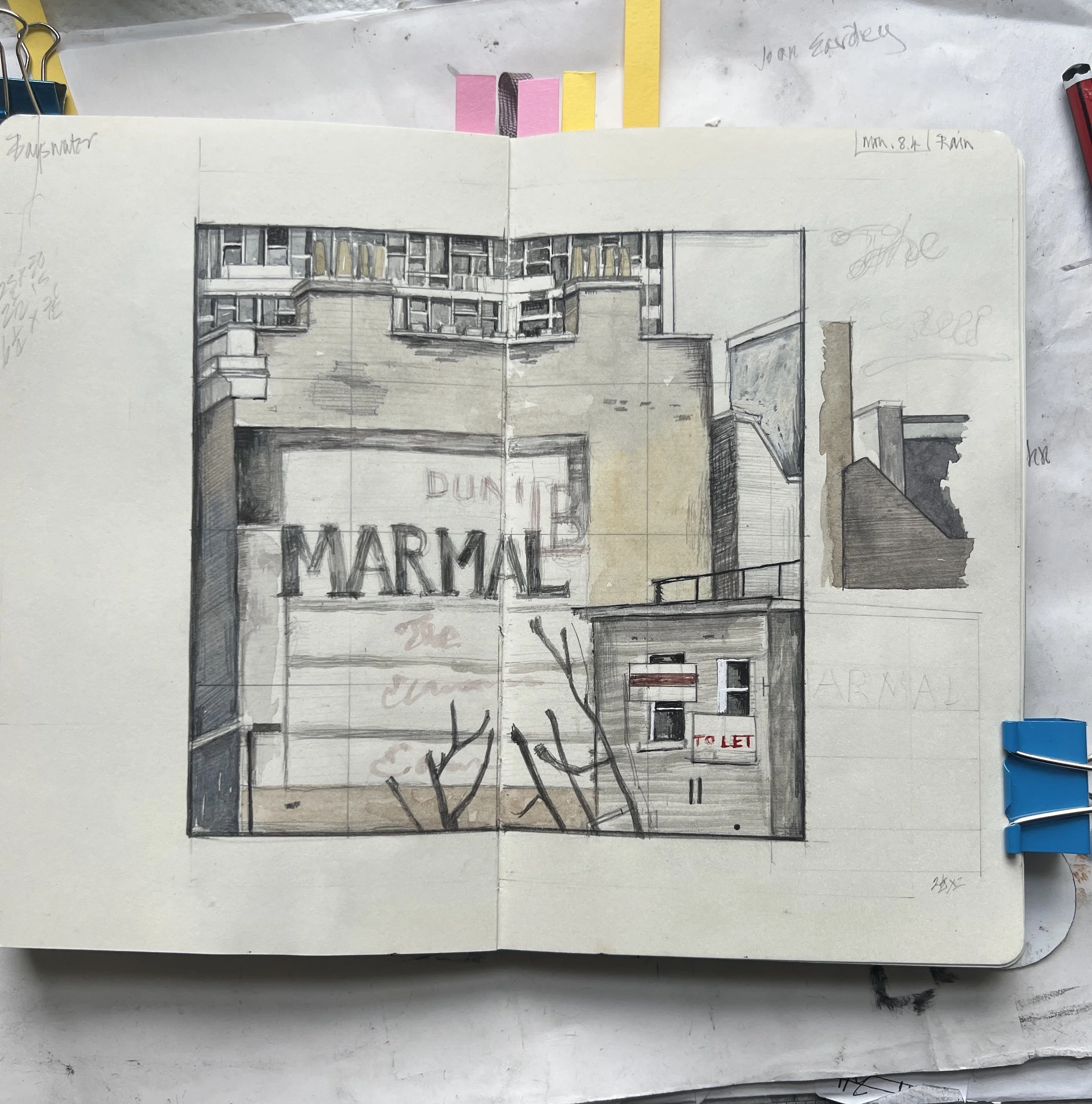
As the urban landscape changes ghost signage can become cropped and truncated. The demolition of neighbouring buildings, extensions and alterations can unexpectedly reveal or partially obscure historic painted signs. In many cases only fragments survive, inviting the viewer to imagine what once covered the whole wall.
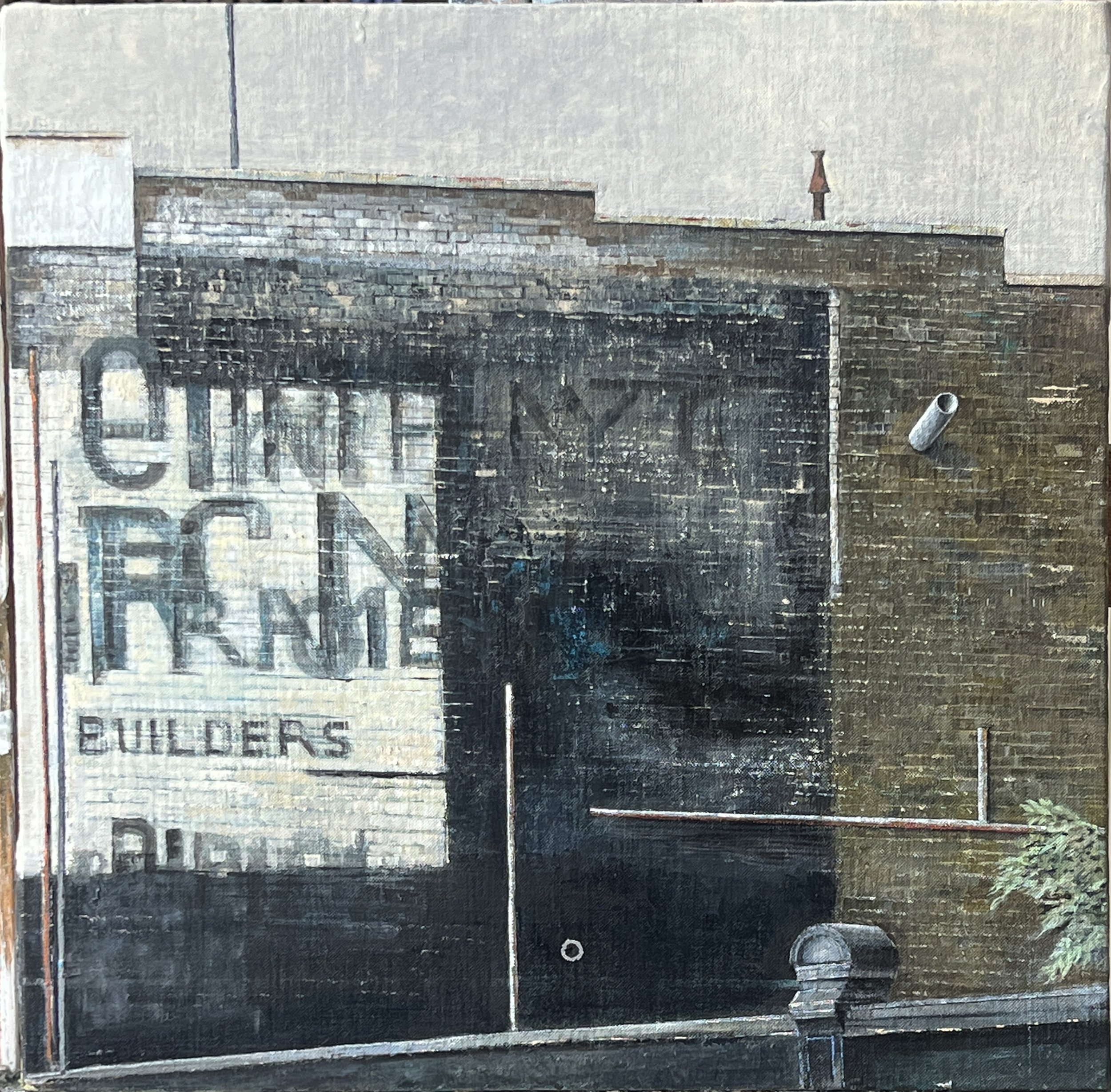
The superimposition of letters can create incomprehensible designs.
These accidental combinations of lettering, colour and texture often create abstract compositions that are visually interesting in their own right, quite apart from the original advertisements they once displayed.
Ghost signs continue to disappear through redevelopment, repainting and restoration, making them an increasingly valuable record of London's architectural and commercial history. Recording them through sketches and paintings preserves not only the advertisements themselves but also a moment in the changing character of the city.